
Checking Criminal History in North Carolina
Begin with the record type, not a person's name. NC SBI Right to Review is the subject-only fingerprint route for one's own North Carolina history. North Carolina eCourts Portal shows public case summaries across all counties. A Clerk of Superior Court can run a certified name search for one county. County sheriffs and detention centers hold current booking data. NCDAC covers state prisoners, probationers, parolees, and post-release supervision.
Gather known names, aliases, a date of birth, the likely county, and an approximate date. A name match is only a lead. Compare the charge, filing county, date, and disposition. When a search returns no result, check spelling and geography before drawing a conclusion. An archived file, reporting lag, expunction, restricted matter, or missing fingerprint can change what each system displays.
- Choose NC SBI for your own biometric history, eCourts for a case summary, NCDAC for state custody, or the registry for registration data.
- Search with a case number or the broadest reliable name form. Add filters only after seeing how the record is indexed.
- Use the county directory for arrest reports, bookings, jail status, court documents, and certified local searches.
- Match identifiers and read the final disposition. An arrest or pending charge is not a conviction.
- Request the official source document when accuracy matters: the clerk's judgment, SBI response, or agency record.
Three North Carolina Criminal Records
A rap sheet, case file, and booking record answer different questions. The NC SBI rap sheet is a compiled, fingerprint-centered history. It can include qualifying North Carolina arrests, charge information, available court dispositions, and custody segments that agencies report. A county criminal case file follows one prosecution and may hold warrants, hearing events, pleas, judgments, and financial entries.
The booking record tracks intake and custody. It may show booking time, arresting agency, charges, bond, photograph, housing, and release status. That record can change before a court case is filed. None of the three replaces the others. The best verification path runs from the statewide lead back to the county office that created the source document.
- Rap sheet
- A fingerprint-centered history compiled by NC SBI from reported events.
- Case file
- The county clerk's docket and documents for one prosecution.
- Booking record
- The detention center's intake and custody information.
- Disposition
- The court's outcome for a charge, not merely a case status label.
Note: A current source document carries more weight than an undated copy or a summary pulled from a separate system.
Inside the North Carolina Criminal History Repository
The NC SBI Criminal Information and Identification Section is North Carolina's central Criminal History Record Information repository. Local law enforcement submits qualifying arrest fingerprints. Court clerks supply final dispositions, and corrections supplies custody data. NC SBI links these pieces into Computerized Criminal History by identity. The file is distinct from the Judicial Branch's case index.
North Carolina has no general-public SBI name-search portal. The direct public product is Right to Review, a fingerprint-based request by the record subject. Authorized agencies use separate statutory channels and access agreements. This division limits false promises: a free court name search can find public cases, but it is not an SBI background check, and a personal SBI review does not contain every document held by a county.
Record flow: Local arrest › Fingerprint submission › NC SBI CCH › County court disposition › Updated rap sheet.
North Carolina Fingerprint Record Review
The NC SBI Right to Review requires a completed form, an FD-258 ten-print card, and a $14 certified check or money order. The form asks for legal name, address, race, sex, date of birth, signature, and request details. A Social Security number is voluntary. A local law-enforcement fingerprint service can provide the card, subject to its hours, identification rules, and local capture fee.
Mail is the current route. NC SBI does not accept personal delivery, private-carrier delivery, or a third-party electronic submission for this public product. The agency states a response may take up to 20 business days from receipt. The result covers North Carolina fingerprint-supported arrests and linked dispositions available to SBI. Records held only by another state or solely by the FBI require their own channels.
| Required identity fields | Name, address, race, sex, date of birth |
|---|---|
| Identity proof | Legible ten-print fingerprint card |
| Payment | $14 certified check or money order |
| Delivery | USPS mail to the subject |
| Coverage | Qualifying North Carolina fingerprint events and available outcomes |
Note: Each extra SBI request or copy requires another fee, and local fingerprint services may charge separately.
North Carolina Statewide Record Systems
Four major systems cross county lines, but each has a narrow job. NC SBI keeps the compiled fingerprint history. North Carolina eCourts Portal indexes public case summaries from District and Superior Court. NCDAC's Offender Public Information Search tracks state prison and selected supervision records back to 1972. The North Carolina Sex Offender and Public Protection Registry displays public registration profiles maintained by SBI with county-sheriff input.
These systems do not create one universal criminal records search. Current county-jail bookings stay local. Full case documents remain with the filing county's Clerk of Superior Court. Incident reports belong to the police, sheriff, Highway Patrol, campus police, or other agency that made them. Federal records sit in FBI, PACER, and Bureau of Prisons systems outside North Carolina's databases.
| System | What It Holds | Run By |
|---|---|---|
| NC SBI Right to Review | One subject's fingerprint-supported North Carolina history | NC SBI CIIS |
| NCDAC Offender Public Information Search | State prison and selected supervision history from 1972 | North Carolina Department of Adult Correction |
| North Carolina Sex Offender and Public Protection Registry | Public registration profiles and search tools | NC SBI with county sheriffs |
| North Carolina eCourts Portal | Public statewide court case summaries | North Carolina Judicial Branch |
Note: A transfer from a county jail to NCDAC can create a short period when neither public view appears current.
North Carolina Jail or NCDAC
County jail and state prison searches are not interchangeable. A county detention center normally holds people awaiting trial, serving certain local sentences, or awaiting transfer. North Carolina has no single public database that combines all county jail rosters. The sheriff or detention center in the county of arrest is the direct source for current intake, bond, housing, and release status.
The NCDAC Offender Public Information Search covers state prisoners, probationers, parolees, and post-release supervisees, with public historical data reaching 1972. It does not absorb county-jail custody. Search by name or NCDAC identifiers, then read custody, sentence, offense, release, and supervision fields in context. NC SAVAN can provide custody alerts, while federal custody requires the BOP locator.
| Custody | Best Source | Key Limit |
|---|---|---|
| Recent county booking | County sheriff or detention center | No unified statewide jail roster |
| State prison | NCDAC public search | Not a source for county detention |
| Probation or post-release | NCDAC and county court file | Public locator omits detailed supervision notes |
| Federal custody | Federal Bureau of Prisons | Separate federal system |
Types of North Carolina Criminal Records
North Carolina criminal records reflect steps in a process. An incident report documents what an agency received or investigated. An arrest and booking record documents custody and alleged charges. The court file tracks prosecution and judgment. NC SBI builds a fingerprint-centered history from qualifying submissions. NCDAC records custody and supervision. The registry covers a separate statutory registration duty. A warrant is court process and is handled differently from a public conviction record.
- Arrest and booking records come from the arresting agency and county detention center.
- Criminal court case files remain with the Clerk of Superior Court in the filing county.
- Repository rap-sheet entries join fingerprinted arrests with available dispositions reported to NC SBI.
- Warrants may be withheld before service and must be confirmed through the issuing court or law-enforcement agency.
- Supervision and registry records come through NCDAC or the North Carolina registry, subject to their own limits.
Read the source and date before relying on any entry. A charge can change between arrest and judgment. An outcome can reach one system before another. Restricted, juvenile, sealed, and expunged records are not ordinary public search results.
North Carolina Warrant Checks
North Carolina eWarrants is an official workflow for justice agencies, not a public statewide warrant index. Portal may show court events after a matter becomes public, but a missing search result does not confirm that no warrant exists. Unserved criminal process can be restricted, and local publication practices vary. Direct confirmation belongs with the issuing court, sheriff, or police agency.
If the warrant may concern you, avoid relying on an aggregator or trying to test the issue through contact with another person. Ask the county clerk or a North Carolina attorney about the correct court and surrender or resolution process. For an immediate safety risk, use emergency services. A warrant entry, arrest record, and final court disposition are separate facts and should not be read as one result.
North Carolina Police Reports
There is no statewide pool of local incident reports. Request a police or sheriff report from the agency that created it. Identify a date range, location, incident number, and specific existing record. Under G.S. 132-1.4, full criminal-investigation and intelligence files are not ordinary public records, though listed incident and arrest facts receive separate treatment. Victim, juvenile, active-investigation, and sensitive details may be redacted.
Highway Patrol crash records have their own channel. The NCDMV crash report page describes official ordering routes and current fees.
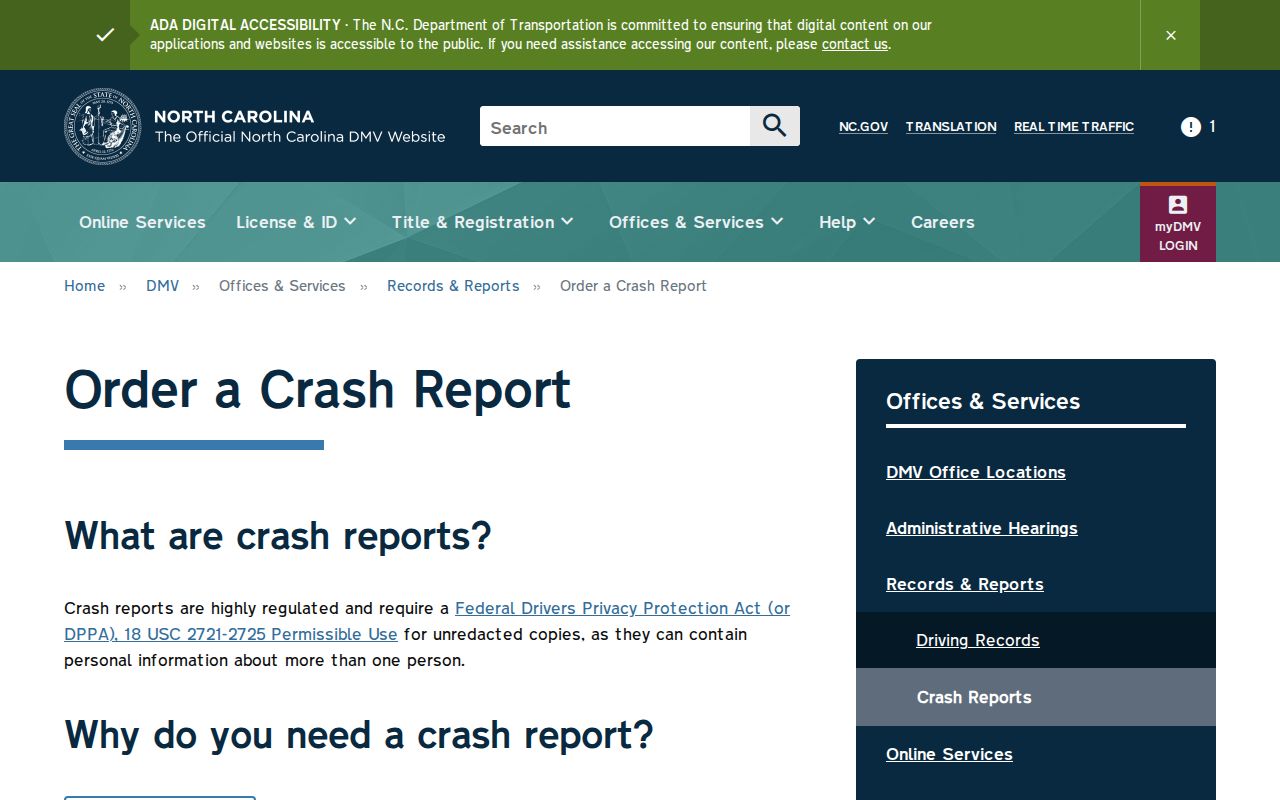
A crash report is not a criminal history search. Its request rules, privacy restrictions, and certification options follow the motor-vehicle record process.
Note: A public incident fact does not open the agency's full investigative file or override a record-specific protection.
North Carolina Supervision Records
North Carolina probation, parole, and post-release supervision are not synonyms. A court orders probation. The Post-Release Supervision and Parole Commission makes release decisions within its authority. NCDAC Community Supervision carries out field supervision through four judicial divisions, 30 districts, and 273 field offices. Its current pages describe more than 2,000 officers and more than 84,000 people supervised.
The public NCDAC locator can show selected supervision status and history. A probation judgment or violation event may also appear in eCourts, while detailed officer notes and risk assessments may remain restricted. Structured Sentencing ended ordinary parole for offenses committed on or after October 1, 1994, so many current prison releases use post-release supervision instead.
The NCDAC Community Supervision overview maps the statewide structure.
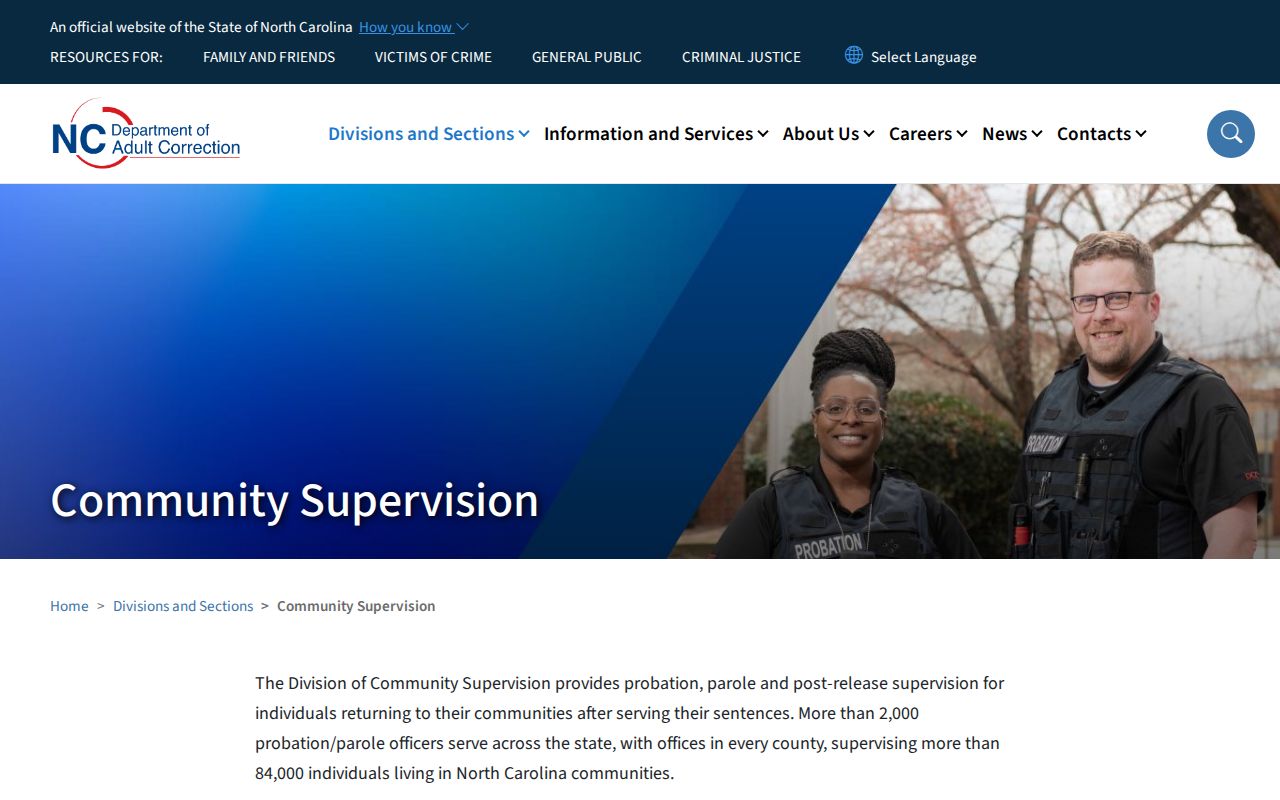
The agency page also routes people to local field offices, while court filings stay with the county clerk.
North Carolina Public Access Laws
The North Carolina Public Records Law in Chapter 132 starts with broad access to government records, then applies statutes that protect specific material. Court records also have their own access rule. Criminal-history dissemination, investigation files, body-camera recordings, juvenile matters, expunctions, and registry information each follow narrower provisions. The lawful result depends on the record and its custodian, not one universal “public criminal record” label.
Key Statutes:
Chapter 132 establishes the North Carolina Public Records Law and its general inspection framework.
G.S. 132-1.4 distinguishes listed public incident facts from protected criminal-investigation and intelligence information.
G.S. 7A-109 governs inspection, copying, and electronic access for court records.
G.S. 15A-502 governs fingerprinting for qualifying arrests and forwarding those prints to SBI.
Chapter 14, Article 27A sets North Carolina registration duties and public registry rules.
A records request should identify an existing record with enough detail for the office to find it. Chapter 132 does not require an agency to create a new report. NCAOC is not the custodian of county case files or police records, so its administrative request form cannot replace the clerk or originating agency.
Note: Copy charges and redactions can differ by custodian even when the same state access law applies.
North Carolina Criminal Record Expunction
North Carolina uses the term expunction. Relief is governed mainly by Chapter 15A, Article 5, and eligibility varies by the outcome, offense, age, prior record, and waiting period. The process begins in the county court that holds the case. A statewide database cannot grant relief, and a private removal request cannot substitute for a signed judicial order.
Start with the Judicial Branch expunction hub and select the form tied to the exact statutory ground. File through the Clerk of Superior Court in the case county. The court obtains required checks and routes an entered order to agencies. When NC SBI receives a valid order, its expunction unit removes the designated CCH and fingerprint data as the law directs.
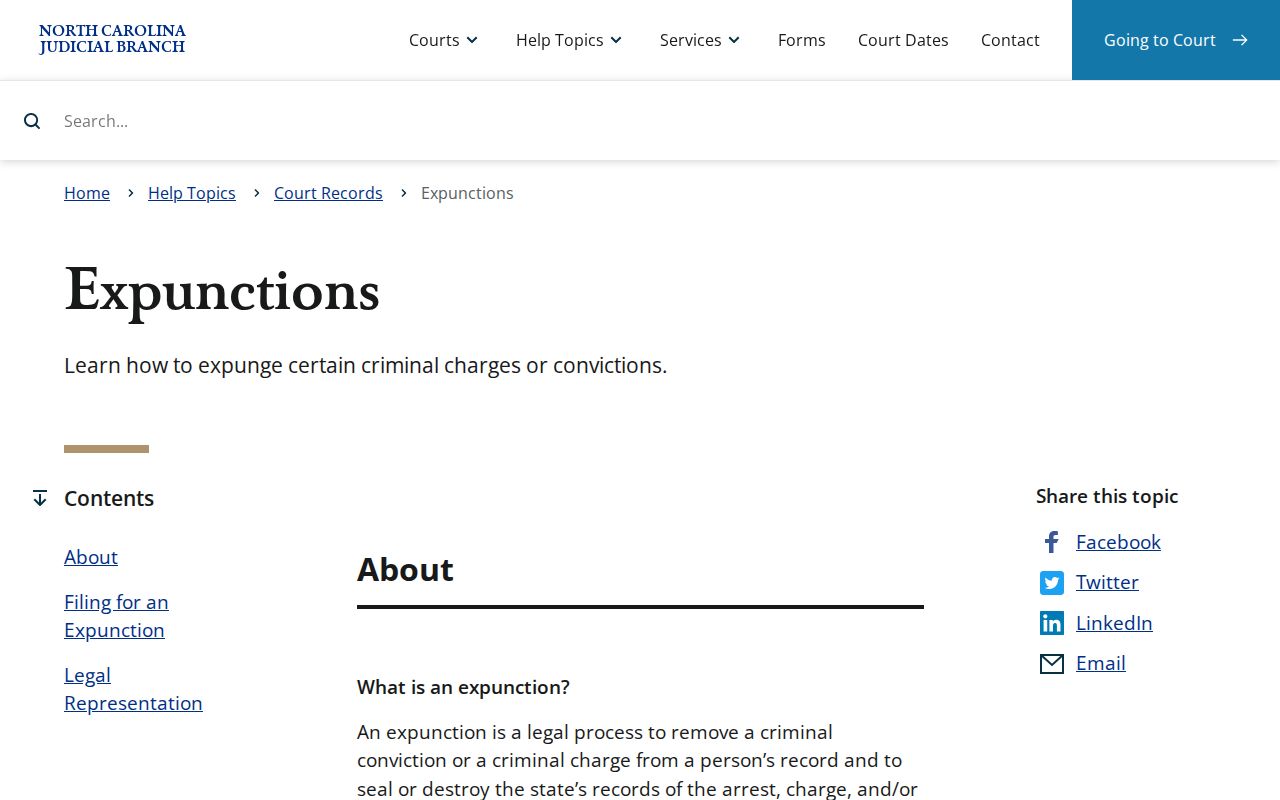
The form hub makes clear that dismissal, conviction, identity-theft, juvenile, and other remedies use different petitions and rules.
North Carolina Criminal Record Fees
Fees belong to the channel that supplies the record. A free Portal result is not certified. A county certificate does not search all counties. Fingerprint capture can add a local charge to an SBI or FBI base fee. Confirm the current collecting-office page before paying, because local copy, card, postage, and archive costs are not uniform statewide amounts.
| Record Channel | Base Fee | Limit |
|---|---|---|
| NC SBI Right to Review | $14 | Subject's North Carolina fingerprint history; local card fee may add |
| FBI Identity History Summary | $18 | Federal fingerprint summary; capture or channeler fee may add |
| Certified clerk criminal search | $25 | One name and one county |
| Courthouse terminal search | Free | Statewide and noncertified; print fee may apply |
| eCourts Portal | Free | Public case information, not an official certificate |
| Expunction petition | Generally $175 when applicable | Some dismissal or not-guilty categories have no fee; waiver may apply |
North Carolina Criminal Record Classes
North Carolina felony classes run A, B1, B2, and C through I. Superior Court tries felony cases. Misdemeanors use classes A1, 1, 2, and 3 and begin in District Court, with trial de novo in Superior Court after an appeal from District Court. A class label alone does not state the sentence. Felony punishment also turns on prior-record level and the mitigated, presumptive, or aggravated range.
The felony framework and misdemeanor framework supply the current grids. On a court record, compare the original charge, convicted offense, class, disposition, and sentence. Charges can be reduced or dismissed. Do not infer a conviction class from the arrest allegation.
Note: “Disposed” means the court acted on the matter; it does not identify whether the result was guilty, dismissed, or another outcome.
North Carolina eCourts Reached Statewide
On October 13, 2025, the last 13 counties moved to Enterprise Justice, completing the eCourts rollout across all 100 North Carolina counties. The change standardized case management and public Portal access. It did not merge county court files into NC SBI's fingerprint repository. Clerks still hold case documents, while SBI still compiles qualifying reported criminal history by identity.
The Judicial Branch eCourts page records the statewide completion milestone.
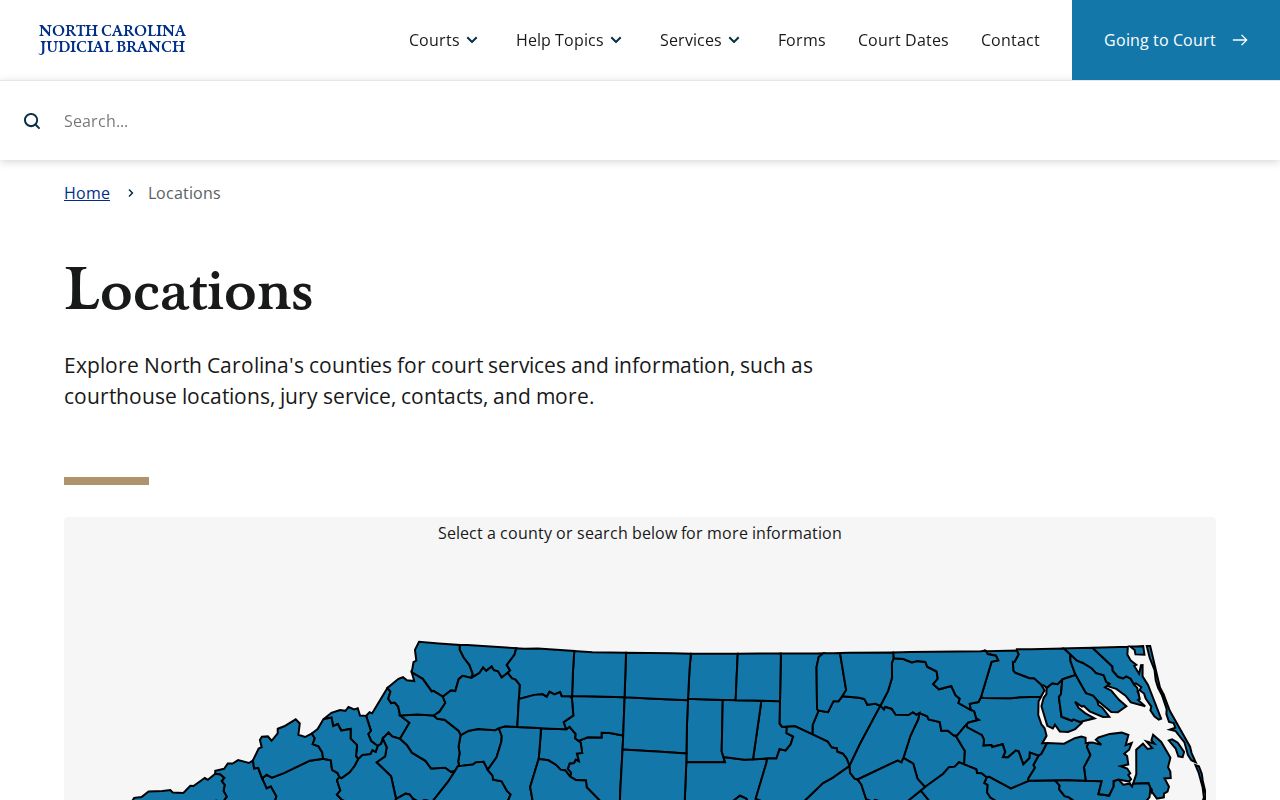
The courthouse directory remains essential for certified searches, archived files, copies, and any document not available through a public case summary.
Criminal Records by County in North Carolina
Arrests, bookings, jail files, police reports, and original court documents are created locally. Start with the county where the event occurred. North Carolina's largest counties include Wake, Mecklenburg, Guilford, Forsyth, Durham, and Cumberland, but every one of the 100 counties has its own clerk and local law-enforcement routes. Statewide Portal and SBI results often point back to those offices for verification.
The official North Carolina county directory confirms county names and seats.
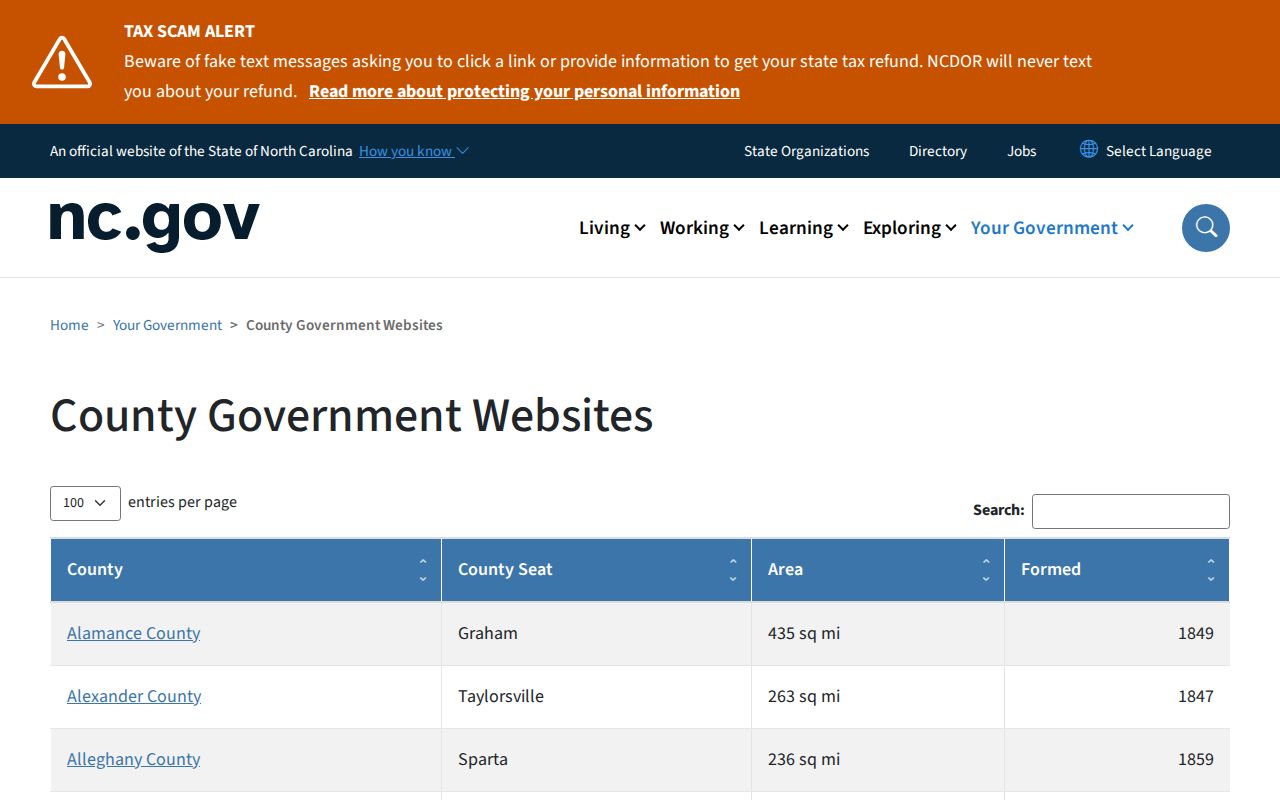
The state list helps identify the right county government, while each criminal records site below focuses on its clerk, sheriff, jail, and request channels.
Wake County
Raleigh · Largest county and state-capital records hub
Mecklenburg County
Charlotte · Major urban court and booking system
Guilford County
Greensboro · Large Piedmont court and detention network
Forsyth County
Winston-Salem · Metro clerk and sheriff sources
Durham County
Durham · Local court and booking verification
Cumberland County
Fayetteville · Urban and military-area record routing
Browse the full directory of all 100 North Carolina counties to open the criminal records site for any county.