
Running a Sex Offender Check in North Carolina
The North Carolina Sex Offender and Public Protection Registry is the statewide source. It is free without an account. The NC SBI publishes the data and performs statewide quality review. Each county sheriff takes registrations, keeps the original form, verifies addresses, and enters updates. That split matters. SBI operates the interface, but the sheriff closest to a registration record is the source for local proof, suspected nonregistration, and corrections.
The North Carolina list does not include every person ever accused or convicted of a sexual offense. Public results cover people who have a reportable duty under North Carolina law. Some juvenile registration information is not public. Data may also change after a sheriff acts. Compare the photograph, physical details, status, and conviction block before drawing any conclusion. Only fingerprints can prove identity when a name and birth date resemble someone else’s.
The North Carolina registry’s search and map interface shows how North Carolina combines person and place searches.
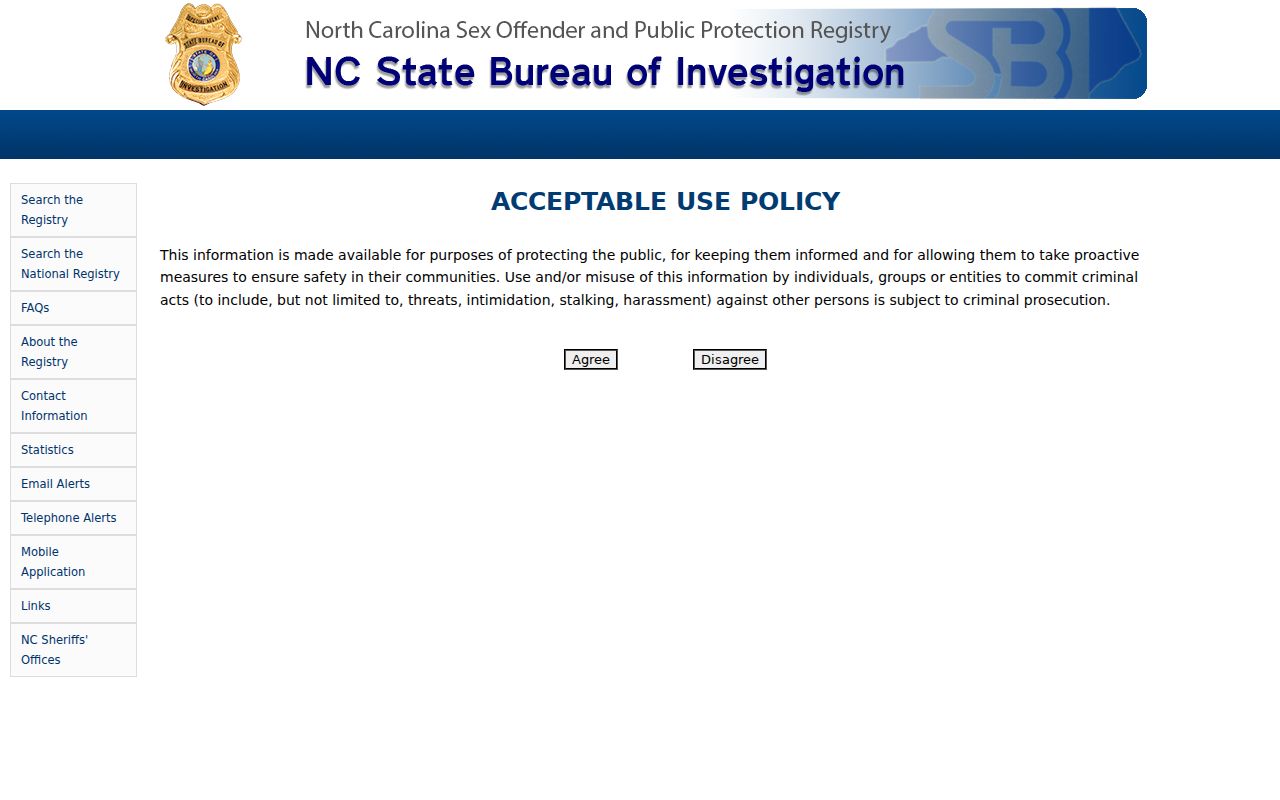
The North Carolina interface supports both a direct identity check and a broader community-awareness search without exposing private victim information.
County Sheriffs Maintain North Carolina Registry Data
North Carolina registration occurs in person with the sheriff of the county of residence. A new resident generally must report within three business days of establishing residence or after being present in the state for 15 days, whichever comes first. A person released from a penal institution generally has three business days after release or arrival in the county. A qualifying conviction without active imprisonment triggers immediate registration.
That county role continues after the first form. Sheriffs verify addresses, take the current photograph and fingerprints, and process changes. A written request may seek an individual form, part, or all of a county registry; copy and mailing costs may apply. When a public field appears wrong, gather reasonable proof and contact the registering sheriff. The North Carolina county directory routes readers to local records resources across all 100 counties.
Note: A registry profile is published by SBI, but the displayed county sheriff is the practical contact for registration facts and corrections.
How to Search the North Carolina Sex Offender and Public Protection Registry
The North Carolina portal first presents an Acceptable Use Policy. Agreeing opens several paths: a general offender search, an address map, a direct Sex Registration Number search, and latitude-and-longitude mapping. At least one category is needed for a general search. Keep alias names and incarcerated people included for a broad first pass, then narrow by age, city, ZIP code, county, or status. Exact spelling can hide a result, while a loose common-name match can point to the wrong person.
- Open the official registry, read the use policy, and choose the search mode that fits the question.
- Start with geography or a last name. Add age, city, county, ZIP code, or status only as needed.
- Open a result and compare its photograph, aliases, physical traits, last verification date, registration type, and conviction details.
- Use a radius or profile subscription for updates, and ask the displayed sheriff about a suspected error or compliance issue.
The official North Carolina registry options screen displays these search controls in one place.
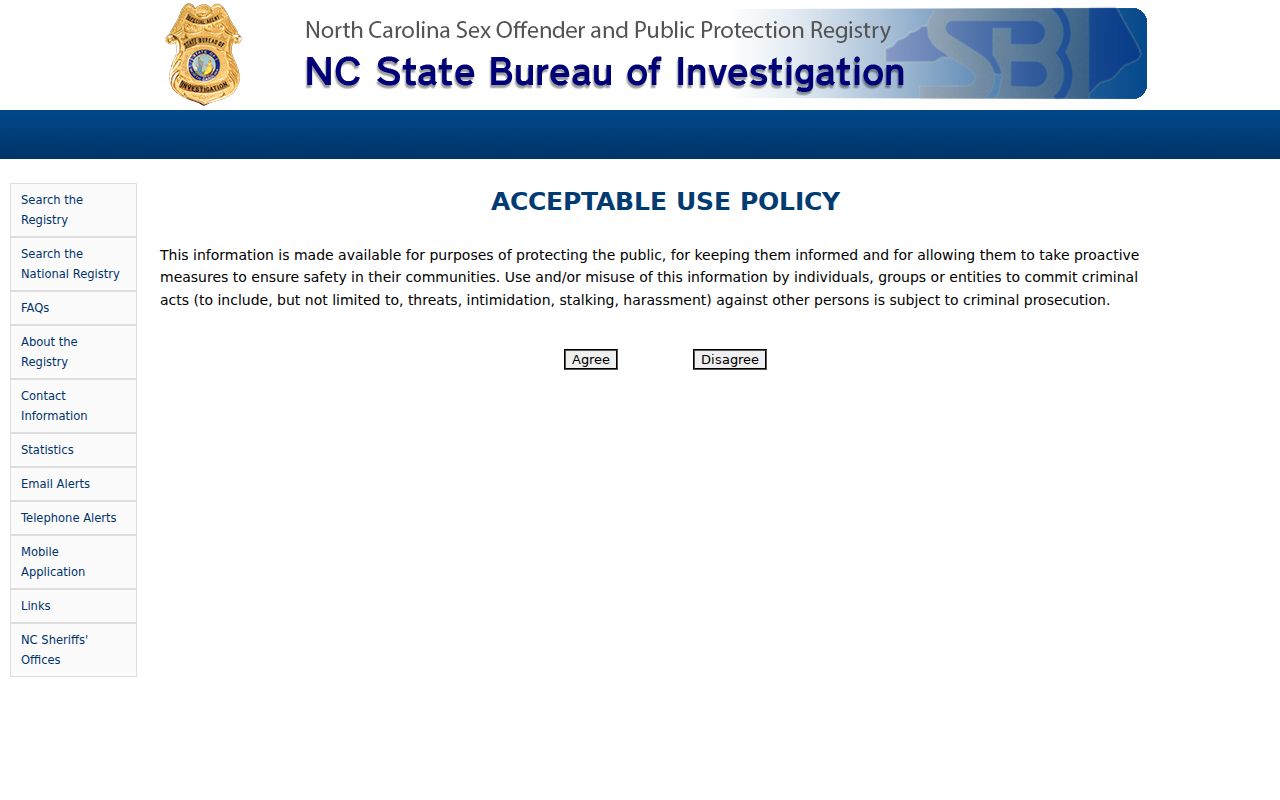
North Carolina’s separate methods help prevent a broad name search from being mistaken for a precise address-based check.
| Field Label | Type | Required | Notes |
|---|---|---|---|
| Last and First Name | Text | One category | Each accepts up to 31 characters; alias matching is selected by default. |
| Age, City, ZIP, County | Text and dropdown | One category | Age accepts 3 characters, ZIP accepts 5, and county lists all 100 counties. |
| Status | Dropdown | One category | Choices include Registered, Pending Registration, address failures, Recidivist, and Aggravated. |
| Street Address and Radius | Map controls | Address for map | Resolve an NC address, then select 1, 3, or 5 miles. |
| Latitude and Longitude | Text and map | Both for this method | Each accepts up to 16 characters for rural or unaddressed locations. |
| Sex Registration Number | Text | Yes for SRN search | Accepts up to 10 characters. |
| Email Alerts | Account signup | No | Tracks reported address changes within a saved 1-, 3-, or 5-mile circle. |
North Carolina Radius Searches Need Context
An address search resolves a location and plots reported registry points within one, three, or five miles. It is useful for community awareness. It is not a risk score. A mapped point does not prove that a person is at the site now, and the circle does not measure whether a statutory property-line restriction has been met.
North Carolina’s residence rule can bar a covered registrant from knowingly living within 1,000 feet of the property line of a school or child-care center. Definitions, grandfathering, higher-education exceptions, and later changes to nearby property complicate the rule. Presence restrictions also depend on the person and place involved. Do not turn the map into a legal finding. Ask the registering sheriff or a court about how current law applies to a specific record.
Note: Registry map distance is a search aid, not an official survey or a ruling on compliance with state law.
Inside a Registry Profile
A North Carolina public profile brings several kinds of data together. The header may show the name, Sex Registration Number, and reported address. Photo views and physical details help distinguish people with similar names. Registration type, status, registering sheriff, registration date, and last address verification describe the registry record. Repeated conviction blocks can show the offense and conviction dates, jurisdiction, release, confinement, probation, statute, offense description, and the ages of the victim and offender. Victim identity is not public.
The official registry profile layout demonstrates the available sections without requiring private identifying values to be repeated here.
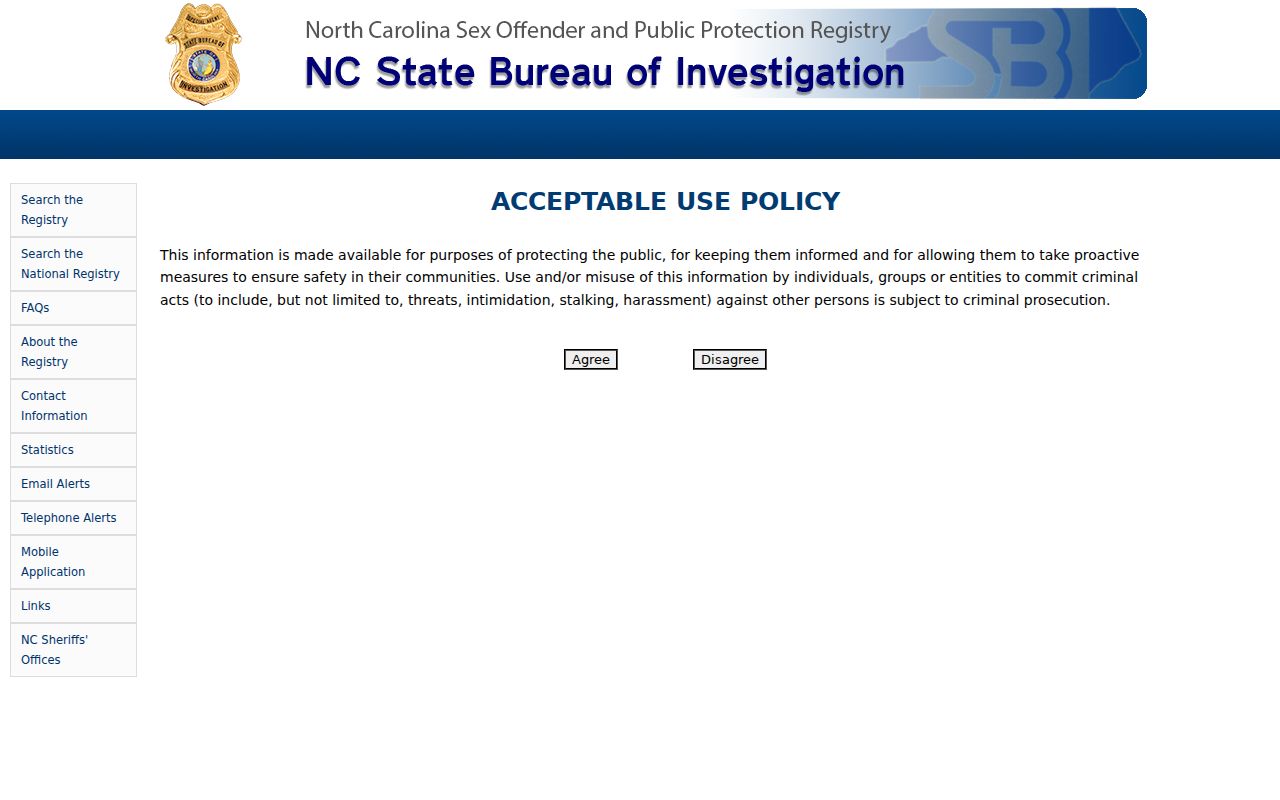
Reading the sections together is safer than relying on one status label, one name, or a single old photograph.
| Name and Aliases | Primary name plus reported aliases used to broaden identity review. |
|---|---|
| Photos and Description | Front and side images when available, with race, sex, height, weight, hair, eyes, and birth date. |
| Reported Address | Registry address tied to the registering sheriff; it is not proof of moment-to-moment presence. |
| Conviction Details | Offense and conviction dates, jurisdiction, statute, description, sentence data, and ages without the victim’s identity. |
| Registration Type | North Carolina program classification and minimum period, not a federal Tier I, II, or III label. |
| Compliance Status | Current registry label, last verification, registration date, and listed violations; changing labels should be checked with the sheriff. |
Note: Vehicles, general workplace data, online identifiers, and GPS coordinates were not observed on the current public profile.
North Carolina Registry Alerts Track Changes
North Carolina offers both place-based and person-specific alerts. A free SBI email alert account can hold more than one address and a one-, three-, or five-mile radius. The notice is triggered when a registrant reports an address within the saved circle. It does not report every visit, arrest, or offense. A profile’s subscription control follows updates to that named record instead.
Telephone alerts are also available through the registry and NC SAVAN for a specified person or ZIP code. Keep account contact details current. Alerts can support a safety plan, but they cannot replace direct awareness or a call to law enforcement when there is an immediate concern.
North Carolina Registration Requirements and Levels
North Carolina does not present public profiles through federal Tier I, II, and III labels. Chapter 14, Article 27A uses North Carolina programs and classifications. Part 2 covers a resident with a reportable conviction and qualifying nonresident workers or students. Part 3 applies to a recidivist, an aggravated offense, or a person judicially classified as a sexually violent predator. Part 4 juvenile registration is nonpublic and follows separate juvenile-court rules.
| North Carolina Program | Duration | Verification Frequency |
|---|---|---|
| Part 2 public registration | At least 30 years; an eligible person may petition after 10 years | Twice yearly: anniversary and six months later |
| Part 3 lifetime program | Life, subject to narrow events such as reversal, vacatur, set-aside, or an unconditional pardon of innocence | Every 90 days |
| Part 4 juvenile registration | To age 18 or the end of juvenile jurisdiction, whichever comes first | Semiannual through the juvenile court counselor; not public |
| Juvenile convicted in Superior Court | Part 2 or Part 3 rules | Applicable adult verification schedule |
A petition after 10 years is not an automatic 10-year end date. The court must consider later reportable offenses, federal standards, compliance, and public safety. A denied petition may be filed again after one year.
North Carolina Registry Changes Move Fast
Many updates use short deadlines. An address change requires in-person written notice to the last sheriff by the third business day. A move to another North Carolina county also requires notice to the new sheriff no later than the tenth day. A planned move out of state generally requires notice at least three business days before leaving. Name and academic-status changes can also trigger three-business-day duties, while an online identifier change has a 10-day rule.
Verification differs by program. Part 2 uses a nonforwardable form twice each year, which must be returned in person within three business days. Part 3 verification occurs every 90 days. Willful failures listed in North Carolina law can be felonies. North Carolina residents should report a concern to the sheriff or law enforcement, not try to investigate or confront a person.
North Carolina Registry Versus National Search
The North Carolina portal gives more local context, including the registering sheriff, state status terms, profile history, and county-based geography. It cannot replace another state’s registry when a person, address, or conviction crosses a border. The U.S. Department of Justice’s National Sex Offender Public Website searches participating jurisdictions and provides a useful cross-state layer.
The official NSOPW national search interface shows how that broader query begins.
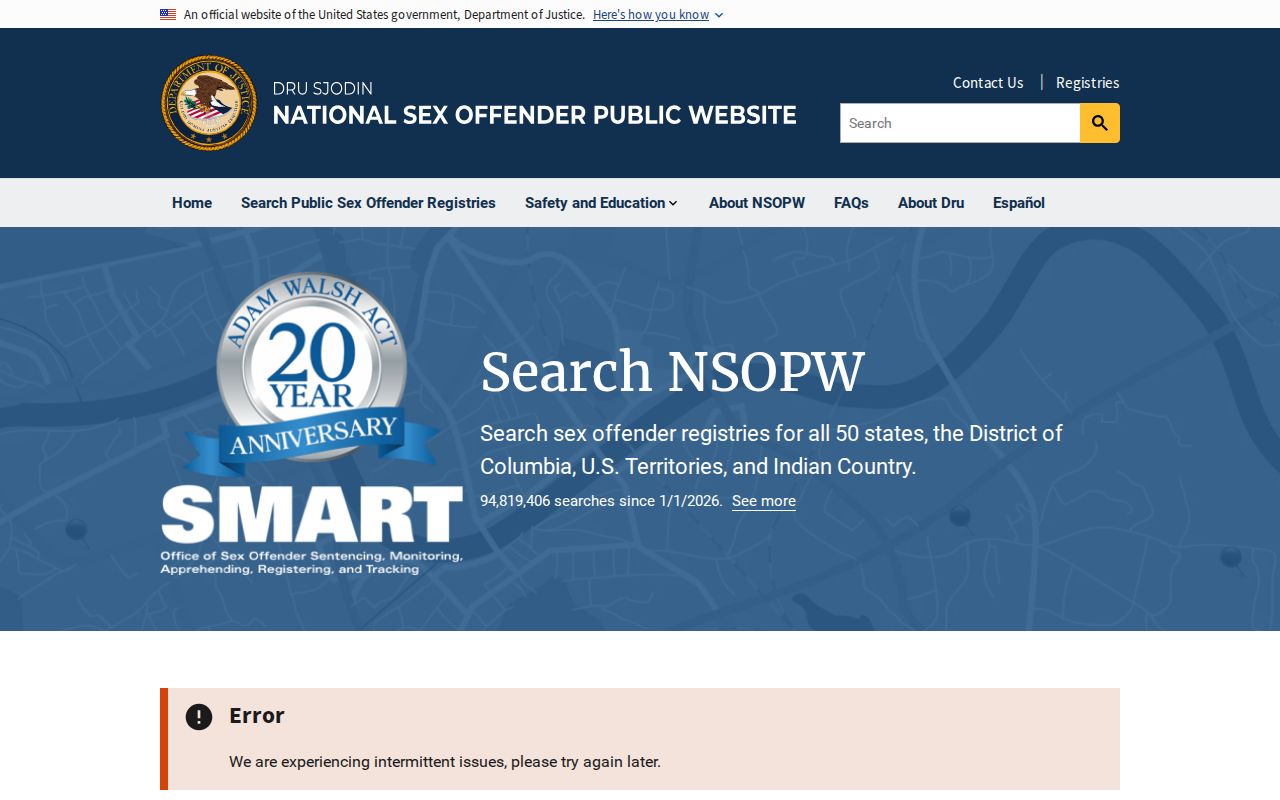
After a national match, open the source jurisdiction’s registry and court record because state classifications, public fields, and update practices differ.
Lawful Use of Registry Data
The North Carolina registry is meant for public awareness and proactive safety. Use a result to make careful plans, confirm an identity, subscribe to updates, or contact the proper official. Never threaten, stalk, intimidate, harass, or confront a listed person. The portal’s Acceptable Use Policy warns that such conduct can lead to criminal prosecution. Suspected noncompliance belongs with the sheriff or law enforcement.
Registry status is also not the same as a new court judgment. “Failure to Verify Address” and “Failure to Change Address” are public status labels that may change after sheriff action. Check the displayed sheriff and, when offense context matters, the court that holds the underlying conviction file. That approach protects public safety while reducing false claims based on stale data or a mistaken identity.
Misuse can lead to prosecution. North Carolina registry information must not be used to threaten, intimidate, stalk, or harass a registrant. Report concerns to authorities and do not confront anyone.
Note: A missing public result does not prove that no nonpublic juvenile matter, out-of-state duty, or unreported conduct exists.